Festivals That Bring the Basadi Alive
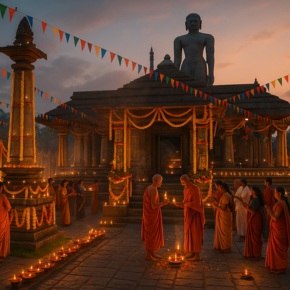
While Shri Chaturmukha Jaina Basadi in Karkala stands in silence through most of the year, there are moments when it comes alive — filled with chants, devotion, and the fragrance of fresh flowers. These are the Jain festivals that celebrate faith, discipline, and inner purity. Each event transforms the temple into a vibrant space of spirituality, community, and timeless tradition.
Mahamastakabhisheka – The Grand Anointing Ceremony
Perhaps the most awe-inspiring event associated with Karkala’s Jain heritage is the Mahamastakabhisheka of Lord Bahubali (Gommateshwara), performed once every 12 years. During this grand ritual, the statue is bathed with milk, saffron, sandalwood paste, turmeric, and holy water — a visual symphony of colors and devotion. Thousands of devotees gather in reverence, chanting prayers and witnessing a ritual that symbolizes purification and spiritual awakening.
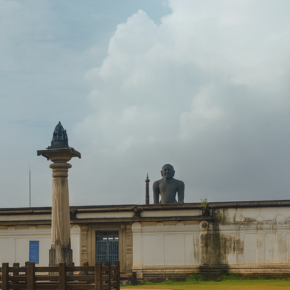
Even though the ceremony takes place at the Bahubali hill, the Chaturmukha Basadi becomes a focal point for associated prayers, rituals, and spiritual discourses throughout the period.
Paryushana – The Festival of Reflection and Forgiveness
Paryushana is one of the most sacred Jain festivals, celebrated over eight days. It’s a time for introspection, fasting, forgiveness, and meditation. During this period, monks deliver sermons at the Basadi, and devotees engage in daily prayers, reading of scriptures, and rituals of repentance (Pratikraman).
The temple’s serene environment enhances the spirit of this festival — reminding everyone of the Jain values of Ahimsa (non-violence) and Satya (truth).
Mahavir Jayanti – Celebrating the Birth of a Visionary
The birth of Lord Mahavira, the 24th Tirthankara, is celebrated with great reverence. The Chaturmukha Basadi is beautifully adorned with flowers, lamps, and banners. Processions (rath yatras) are carried through the streets, scriptures are recited, and devotees perform acts of charity.
It’s not merely a celebration of a birth, but a reminder of Mahavira’s teachings — peace, compassion, and renunciation.
Kartik Purnima & Other Temple Observances
On Kartik Purnima, the full moon day of the Kartika month (usually November), devotees gather for special prayers, fasting, and lighting of lamps around the Basadi. The temple glows beautifully under the moonlight, reflecting an aura of divine peace.
Other observances like Ayambil, Upadhyay Jayanti, and Samvatsari Pratikraman are also observed with quiet devotion throughout the year.
The Spirit of Community and Seva
During festivals, the temple premises become a hub of service (seva). Volunteers prepare food, arrange seating, distribute offerings, and help maintain cleanliness — all done selflessly. It’s a perfect example of Jain principles in action — purity through service and discipline through devotion.
The festivals of Shri Chaturmukha Basadi are not just rituals — they are experiences of the soul. They connect the present with the past, devotion with discipline, and individuals with a greater sense of community. Visiting during these times allows one to witness the living heartbeat of Jain faith — a heritage that continues to shine through centuries.