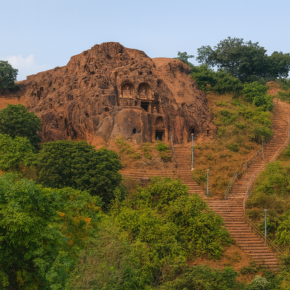

The Mystery Behind the Decline of Bojjanna Konda
Unanswered questions, forgotten records, and the silent fall of a Buddhist hill civilisation
For nearly 1,500 years, the twin hills of Bojjanna Konda and Lingalakonda were alive with the presence of monks, scholars, and pilgrims. Stupas multiplied, caves echoed with chants, and the hills became a peaceful home for Buddhist traditions. But then — almost suddenly — the entire monastic centre vanished from history.
No inscriptions describe the fall, no written records survive, and no ancient texts mention its decline. What happened here remains one of Andhra Pradesh’s most intriguing ancient mysteries.
This blog explores the most researched and compelling theories behind the disappearance of this once-thriving spiritual community.
1. Was It a Natural Disaster?
One of the strongest theories is that a major natural calamity disrupted life at the site:
-
A powerful earthquake may have affected the rocky structures and forced monks to abandon the hill.
-
A volcanic eruption in the Deccan region (historically documented) could have altered weather, crops, and settlement patterns.
Though unproven, archaeological findings show sudden abandonment — a sign that the decline wasn’t gradual.
2. Decline of Buddhism in South India
Between the 7th and 10th centuries CE, Buddhism began shrinking across South India due to:
-
The rise of Hindu kingdoms
-
Structural temples replacing monastery-based worship
-
Migration of Buddhist scholars to Sri Lanka and Southeast Asia
-
Fewer new monks joining monastic life
As Buddhist institutions weakened, Bojjanna Konda may have gradually lost its community and caretakers.
3. Shift of Trade Routes
The region was once part of an active Indo-Roman and coastal trade network. Buddhist sites flourished along these routes.
When maritime routes shifted and coastal activity changed, the hills lost their strategic importance. Monks who depended on merchant patronage likely moved to more prosperous centres.
4. Monks May Have Migrated to Larger Universities
During this period, great Buddhist universities like:
-
Nalanda,
-
Vikramashila,
-
Salihundam, and
-
Amaravati,
grew into major learning hubs. Many monks from smaller monasteries are believed to have migrated to these large institutions for advanced study and community life.
5. Nature Slowly Taking Over
After human activity ended, the hills remained untouched for hundreds of years.
The stupas got buried under soil, trees, and rock layers. By the time the British discovered it in 1880, the entire complex was hidden — nature had reclaimed it completely.
6. The Most Fascinating Part — No One Truly Knows
Despite these theories, one truth remains:
There is no final, confirmed explanation for why Bojjanna Konda fell into silence.
That mystery adds to the magic of this place.
Walking through the ancient stupas today, you can feel the stories hidden beneath the earth — stories of monks, travelers, scholars, and a civilisation lost to time.
The decline of Bojjanna Konda is not just a historical puzzle — it’s a reminder of how even great spiritual hubs can disappear silently, leaving behind only stone, wind, and timeless questions.
And maybe that’s why this place feels so special:
It is not just a heritage site to explore, but a mystery to feel.